
Durham Scheduled and Actual Release
NC DAC uses the exact field label “Projected Release Date” in Offender Public Information, known as OPI. It may appear in the incarceration summary and within sentence-history blocks. The same record can later show “Actual Release Date.” A projection reports the current sentence computation's expected custody event. The actual date records an event that occurred. After release, the actual date, last movement, and both status lines are more useful than an older estimate.
A court order, new sentence, recalculated credit, disciplinary loss, detainer, transfer, or change in law can alter the expected result. A prison release may also begin post-release supervision rather than end the sentence. For a Durham jail detainee awaiting trial, there is no sentence-based projection. Bond, judicial orders, case resolution, and other holds control when departure may happen.
Find a Durham Projected Date
The correct channel depends on the custodian. OPI covers North Carolina prison and state-supervision records and expressly excludes county jail data. The Durham County Detention Facility's current system is charge-oriented, not a sentence calculator. Court records explain judgments and credit, while detention or Sheriff Records can confirm the local movement.
- Classify the custody. Use the known facility, docket, sentence, or agency to distinguish Durham jail from state prison.
- For state prison, open NC DAC Criminal Offender Searches. Choose OPI, then search by offender number or exact identity.
- Read the whole state record. Compare demographics, both status lines, every sentence, projected and actual dates, locations, and last movement.
- For a Durham jail term, check the judgment. Use the docket in eCourts services, then ask detention or Sheriff Records for the actual release or movement record.
- Recheck near the date. Use VINE Inmate Check for a custody-event alert and confirm with the office that owns the record.
The broader Durham released-inmate search helps when the last custodian is unknown. It separates a county release, state prison discharge, and federal or immigration movement so that one system's departure is not mistaken for freedom from all custody.
Durham State Release Date Fields
OPI separates prison status from community-supervision status. Read both. An inactive inmate with active post-release status has physically left prison but remains under supervision. Sentence histories can contain more than one term, and the date from one sentence should not be lifted without checking overlapping commitments.
| OPI field | How to use it |
|---|---|
| Projected Release Date | Current estimate for the sentence computation; it can change. |
| Actual Release Date | Recorded event after release; compare it with status and movement. |
| Inmate Status | Shows whether state prison custody is active or inactive. |
| Probation/Parole/Post Release Status | Shows whether community supervision remains active. |
| Last Movement and Date | Helps identify release, transfer, court order, or another custody event. |
| Sentence Status and Terms | Places the date within the full minimum, maximum, docket, and commitment history. |
The dedicated Inmate Release Search can be filtered by county, year, month, or surname. Durham in that form is the reported state-prison release county or destination, not the county of conviction and not the Durham County Detention Facility. Results show offender number, name, release date, primary offense or qualifier, and type of release.
How Durham Release Dates Compute
Structured Sentencing applies to covered felony offenses committed on or after October 1, 1994. DAC explains that these individuals ordinarily have no parole and must serve the full judicial minimum, with court-awarded jail credit counting. Earned time can reduce the maximum toward the minimum, but not below it. The Commission describes this as 100 percent of the minimum and at least 85 percent of the maximum. That 85 percent statement is not a safe stand-alone calculator.
G.S. 15A-1340.13(d) is the core active-felony rule. G.S. 15A-1355 authorizes earned credit, while G.S. 148-13 directs DAC to issue credit rules and extends those rules to local jail administrators for sentenced jail prisoners.
NC DAC Victim Support Services explains minimum terms and date changes.
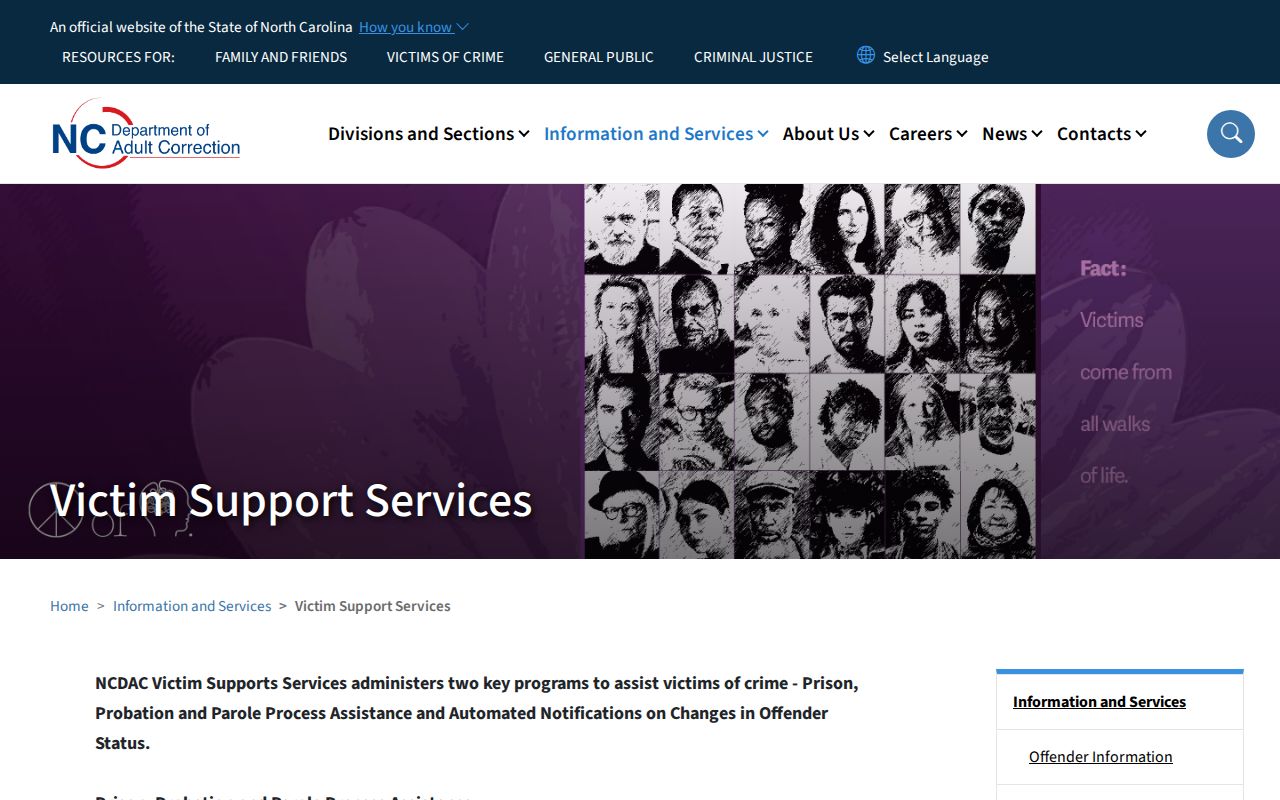
The official explanation reinforces why the judgment's minimum, credit, and current computation must be read together.
Note: Earned time may shorten a maximum term, but North Carolina law does not let it reduce an active felony below the judicial minimum.
Durham Jail Sentence Dates
A pretrial detainee at the Durham County Detention Facility has no sentence-based projected release date. First Appearance, bond review, a release order, dismissal, or another case event may authorize release, but an unrelated warrant or hold can still delay departure. The current Durham IPS can show a Date Released on a charge row, yet one released row does not clear another active charge.
For a local sentence, inspect the court judgment and jail credit. Ask the Durham detention line at 919-560-0912 or the Sheriff Records Division for the existing actual release or movement record. Records Division is on the first floor of the Durham County Courthouse, 510 South Dillard Street, and lists weekday hours from 8:30 a.m. to 5:00 p.m. Its phone numbers are 919-560-0899 and 919-560-0898.
The published report-copy prices should not be assumed to cover a release record. Ask whether the responsive record exists, request electronic production, and obtain the applicable cost before relying on a fee. Supply the person's full name, known identifier, booking range, docket, facility, and a narrow description of the desired release time, code, or public movement destination.
Why Durham Release Dates Change
A projection is recalculated as the underlying facts change. DAC identifies program participation, discipline, new computations, resentencing, transfers, changed law, and other lawful release routes among the causes. Court orders and detainers can also separate a planned prison event from arrival in the community.
| Factor | Possible effect | Where to confirm |
|---|---|---|
| Earned-time gain | May reduce the maximum toward the minimum | Current OPI computation and DAC |
| Disciplinary credit loss | Can move the estimate later | DAC sentence computation |
| New sentence or resentencing | Changes the controlling terms | Court judgment and OPI history |
| Detainer or other hold | May prevent community departure or cause transfer | Custodian and movement record |
| Court order or sentence credit | Can alter the expected date | Official court record and DAC |
| Parole or other lawful route | May change the custody event for an eligible person | Commission record, OPI, field office |
The felony sentencing statute shown below anchors the minimum-term rule. It should be applied to the actual judgment, not turned into a generic date calculator.
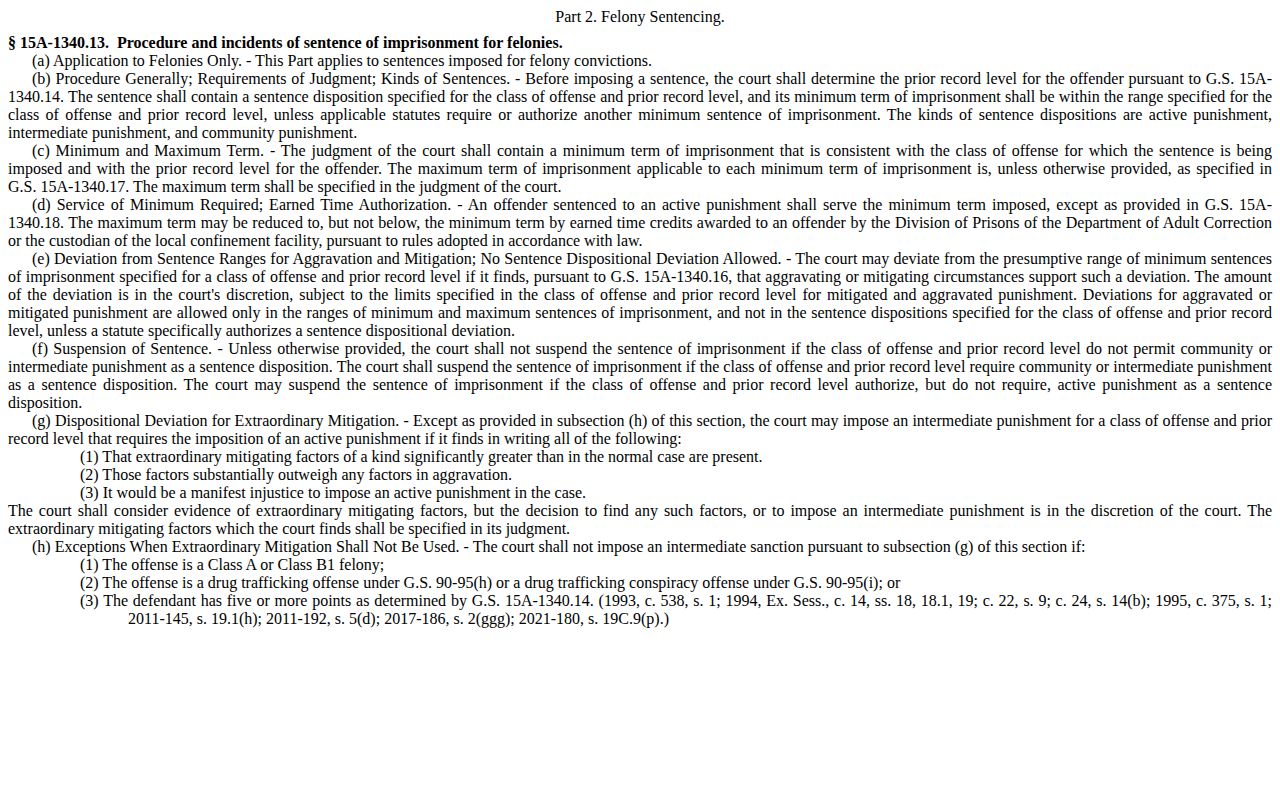
The statutory text explains the legal boundary within which DAC calculates earned-time effects.
Durham Release Into Supervision
For covered felonies, G.S. 15A-1368.2 generally places release to supervision at the maximum less specified statutory periods and earned time. The statute uses different periods for felony classes and special maximums. Physical release under that calculation begins community supervision. It is not the final sentence discharge.
The official statute source below shows why offense class and prescribed supervision time matter to the computation. A searcher should not subtract a single standard percentage from the sentence.
Read North Carolina's post-release calculation statute.
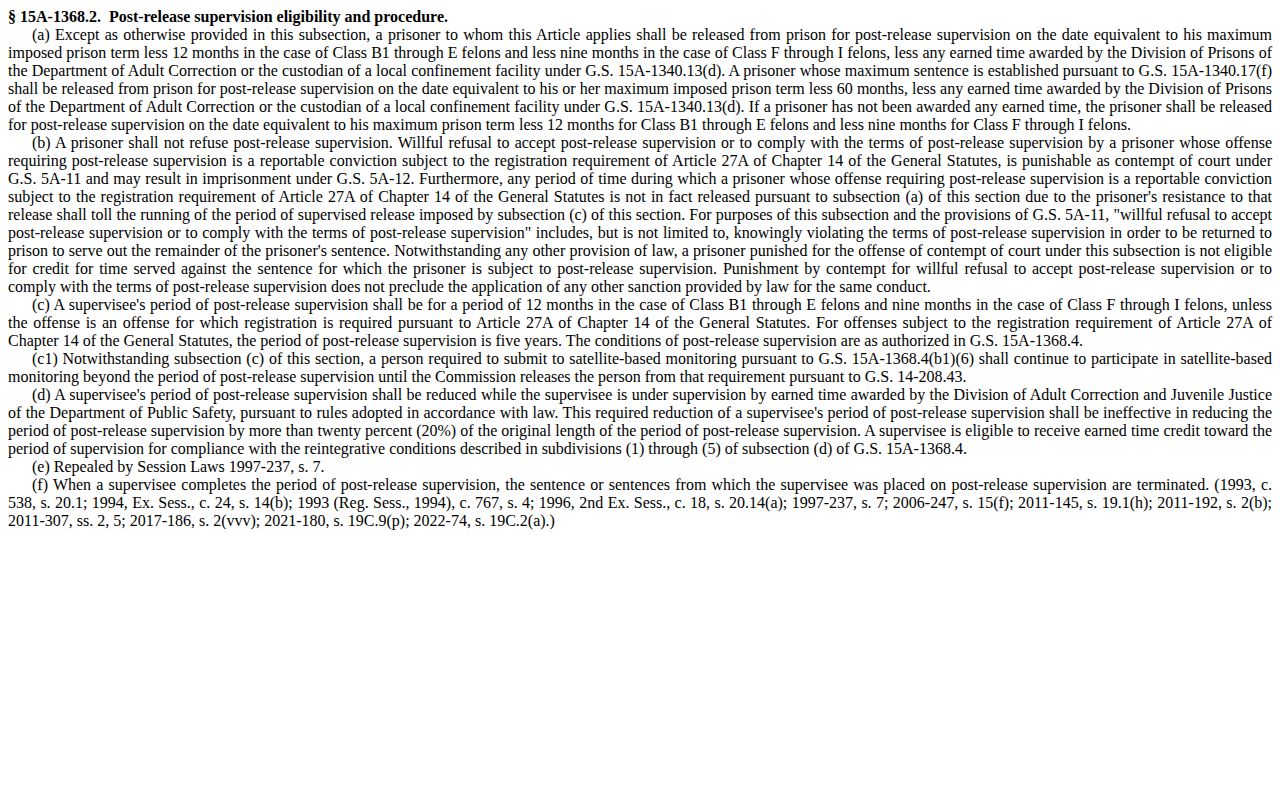
The law distinguishes the prison release point from completion of the supervision period and sentence.
Durham Misdemeanor Release Credit
North Carolina misdemeanor sentences follow a different credit rule. G.S. 15A-1340.20 generally requires service of each day subject to authorized work and earned time and caps combined earned credit at no more than four days per month. The judgment, court-awarded credit, jail calculation, and any other hold still control the individual outcome.
Because OPI excludes county jail data, a Durham local misdemeanor date should not be searched as though it were a state prison projection. The clerk can provide the judgment, while the Sheriff's custodian confirms the actual movement. A forecast based only on sentence length can miss jail credit, another charge, or a transfer.
Confirm Durham Actual Release
Close to an expected event, recheck OPI and register through VINELink for the offered custody notification. North Carolina policy includes notice after an audited projected release computation and distinguishes release with supervision from release without supervision. A VINE alert is useful, but the contributing agency still owns the event.
Afterward, look for an Actual Release Date, compatible inactive inmate status, and the last movement. Then read the separate supervision status. For Durham jail, compare every charge row, the court order, VINE, and the Sheriff's movement record. No result or a stale projected field is not proof that release did or did not occur.
A state release result also needs its “Type of Release” read in context. Release to post-release supervision, parole, another state, or another authorized destination does not carry the same meaning as an unconditional sentence discharge. For a Durham destination in the dedicated release search, confirm where the person was confined and whether supervision remains active. That county choice reports a destination, not a Durham jail release. If the records conflict, ask DAC for the existing admission, sentence, time-served, release, or movement record by offender number and date range. DAC states that electronic copies are the default and that public requests are handled as promptly as possible, with large requests potentially produced in batches.